Beginning with broad Constitutional rights, the 8th Amendment generally prohibits “cruel and unusual punishment.”
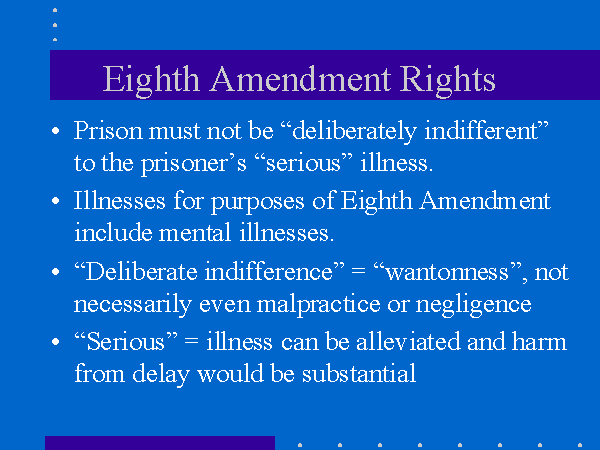
Interpreting this language, Court in Estelle v. Gamble held that prison must not deliberately ignore a prisoner’s “serious” ailment, thereby setting a very low 8th Amend. Standard of care toward prisoners.
In addition, the 4th Circuit has held that there is no underlying distinction between the right to medical care for physical ills and their psychological counterpart. Thus, Virginia prisons must not be deliberately indifferent to a prisoner’s serious mental illness.
Many lower courts have struggled with determining what constitutes “deliberate indifference” and a “serious illness.”
Eleventh Circuit defined “deliberate indifference” to be “wantonness”
Eighth Circuit has also said that even “multiple incidences of medical malpractice or negligence do not amount to deliberate indifference without some specific threat of harm from a related system-wide deficiency.”
4th Circuit has said that a “serious” illness entitles a prisoner to medical attention if “a physician or other health care provider concludes with a reasonable certainty that 1.) the prisoner’s symptoms show a serious disease or injury; 2.) the disease or injury is curable or may be substantially alleviated; and 3.) the potential for harm by reason of delay would be substantial.