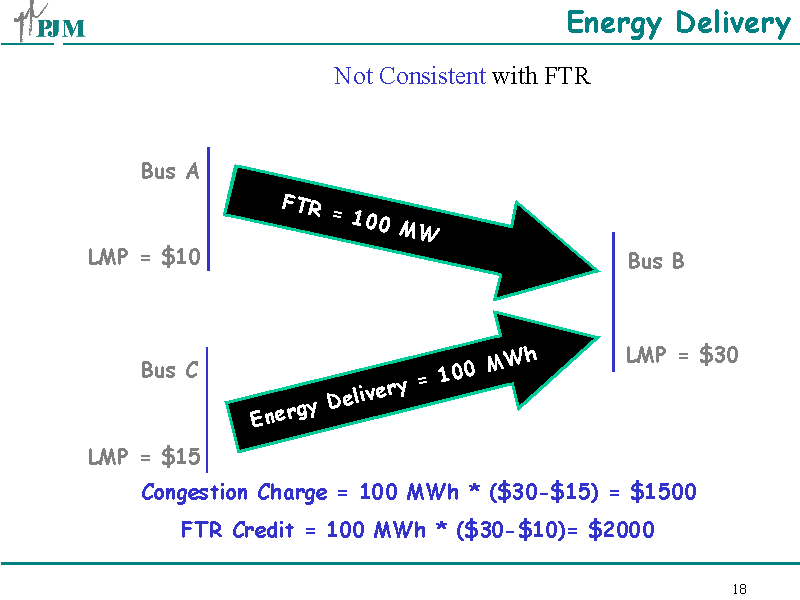
Now let’s look at another example in which the energy delivery is NOT consistent with the FTR.
Our FTR is defined from Bus A to Bus B for 100 MW.
The energy deliver is 100 MWh from Bus C to Bus B. This is inconsistent with the FTR (the energy delivery and FTR source and sink are not the same.)
In this case ,the congestion charge is the 100 MWh times the difference between the LMPs at Bus B and Bus C (or $30 - $15). The congestion charge that this participant has to pay is $1500.
However, this market participant also receives an FTR credit equal to the 100 MW times the difference between the FTR’s source and sink, or $30 - $20. So in this case the Market Participant receives an FTR credit for $2,000.
So, in this case the FTR holder ends up ahead $500.
Although inconsistent with the energy delivery, this situation is a case where the FTR is a benefit.