Commission
on Electric
Utility Regulation
Testimony to the LTTF by Alden M. Hathaway, II
October 16, 2001
Dear Distinguished Chairman and Honorable Members of the Legislative Transition Task Force for Utility Deregulation:
My name is Alden M. Hathaway, II and I am a resident of Purcellville, Virginia in Loudoun County. I recently testified to the State Corporation Commission against the proposed gas-fired power plant near Leesburg, Virginia that is being lobbied for by the Tractebel Company from Houston, Texas. In so doing, I have joined an overwhelming majority (over 90%) of the Loudoun population protesting this plant.
It is not that we do not need the electricity, for I believe we do. It is that most of the citizens of Loudoun County, including myself, object to the negative effects of such a plant:
- Significant NOx emissions in a region that is already in Ozone non-Attainment;
- High water consumption;
- Noise;
- Smokestacks;
All of these negatives will despoil the natural beauty of the County while the plant is sited in close proximity to residential neighborhoods. I objected to the plant because there are alternatives that the County and the State could put to use that would alleviate, if not eliminate the need for future fossil-fuel peaker plants.
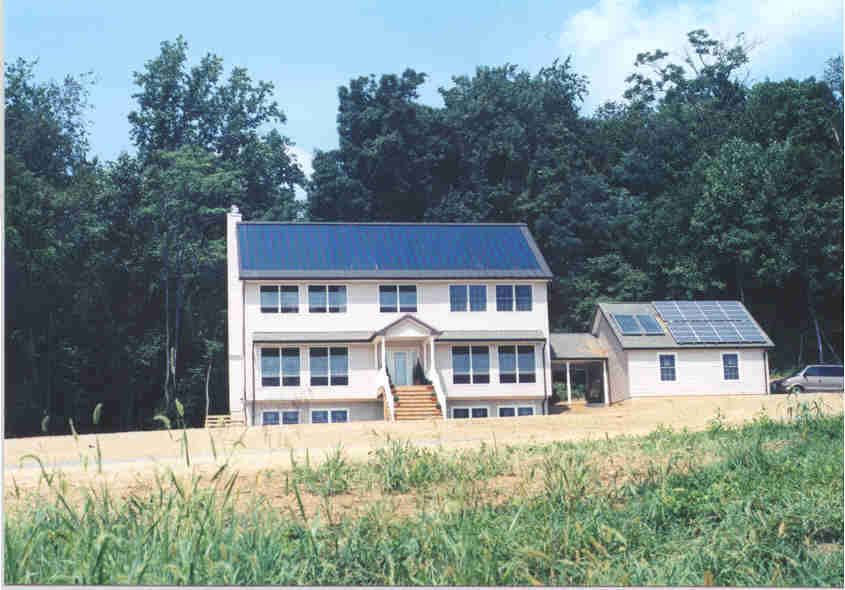
I just moved into a zero-energy house in western Loudoun County. We achieved this by building our house using the Energy Star Homes guidelines for energy-efficiency and incorporating 6 kilowatts of photovoltaic solar modules on our roof, including modules made by BP Solar, a company with a plant in Toano, Virginia. The house is important for a number of reasons;
- It provides more energy throughout the year than consumed by my family;
- The solar electricity is produced during the peak daytime when the electric grid most needs it;
- The house is cost-comparable to other non-solar houses in the Loudoun County area – while our monthly energy savings makes us a lower economic risk to the bank;
- The modular home industry, responsible for building our house, has a number of factories in Virginia;
- The house is comparable to a traditional house providing all the modern amenities expected in a new house while providing electric relief to a constrained electric grid;
- A subdivision of 10,000 zero-energy solar homes would eliminate the need for a 100 Megawatt fossil fuel peaker plant, providing the necessary power infrastructure without the emissions, water consumption, noise or smokestacks;
In fact, near Fredericksburg, Virginia, developer, John Clark is proposing a 4,000 home community of zero-energy solar homes as part of a new sustainable development called Haymount. He has been toiling with this development for almost fifteen years with little help from the State or county and no help from local utilities. Even so, he is about 3 – 5 months away from beginning construction. Perhaps, Virginia, could alleviate the political football of siting new fossil-fuel power plants in communities that do not want them, by instead offering fast-track zoning approval, low interest financing and favorable tax benefits for developers or homeowners who pledge to build and/or buy zero-energy solar homes.
Alden M. Hathaway, II
15126 Shannondale Rd
Purcellville, Virginia 21032